
Introduction to Modular Displays and Traditional Booths
When it comes to showcasing your brand at trade shows and exhibitions, having the right display solution is crucial. The debate between modular displays and traditional booths has been ongoing, with each having its own set of advantages and disadvantages. In this guide, we’ll explore the key differences between these two options, helping you make an informed decision for your business.
Understanding Modular Displays and Traditional Booths
Modular displays are reusable, customizable exhibition solutions designed to be easily assembled and disassembled. They’re perfect for businesses that frequently participate in trade shows, as they offer a cost-effective and efficient way to showcase products. On the other hand, traditional booths are often custom-built for a single event, resulting in higher costs and waste.
One of the primary benefits of modular displays is their environmental sustainability. By being reusable, they significantly reduce waste generated by traditional booths. Plus, their modular design allows for easy customization, making it simple to update your display for different events.
- Reduced waste and environmental impact
- Cost savings through reusability
- Easy customization and setup
As we dive deeper into the world of modular displays and traditional booths, we’ll compare their features, benefits, and drawbacks. Whether you’re a seasoned exhibitor or new to the trade show scene, understanding your options is key to making the most of your exhibition budget. For more insights on exhibition solutions in specific cities, you can check out our guides on expo booth Mumbai or exhibition booth Delhi.
The Benefits of Modular Displays
Modular displays are revolutionizing the way businesses approach exhibitions and trade shows. One of the most significant advantages of modular displays is their tool-free assembly, making setup a breeze. This not only saves time but also reduces labor costs associated with complicated booth constructions.
Key Benefits of Modular Displays
- Easy to assemble and disassemble without requiring specialized tools
- Reusable, reducing waste and minimizing the environmental impact of exhibitions
- Customizable to fit specific exhibition needs and branding requirements
When comparing modular display vs traditional booths, the benefits of modular displays become clear. Traditional booths often require extensive labor and resources to set up, and they can be costly to dispose of after the event. In contrast, modular displays offer a flexible and sustainable solution that can be adapted to various exhibition spaces.
For businesses that frequently participate in trade shows, modular displays can make a significant difference. By reducing setup time and labor costs, companies can allocate more resources to other critical areas, such as marketing and sales. Additionally, the reusability of modular displays means that businesses can minimize waste and reduce their environmental footprint.
To learn more about how modular displays can benefit your business, check out our guides on expo booth Mumbai and exhibition booth Delhi for region-specific insights and tips.
Modular Display vs Traditional Booths: A Comparison
Understanding the Key Differences
When it comes to exhibition solutions, businesses often face a crucial decision: modular displays or traditional booths. Let’s dive into the key differences between these two options, exploring their setup time, cost, customization options, and environmental impact.
Modular displays are designed for efficiency, with tool-free assembly that significantly reduces setup time. Traditional booths, on the other hand, often require more labor and time to construct. But that’s not all – the cost implications of these two options also vary substantially.
- Modular displays are reusable, spreading their initial cost across multiple exhibitions.
- Traditional booths are typically custom-built for a single event, making them more expensive in the long run.
Customization is another area where modular displays shine. Their modular design allows for easy reconfiguration to suit different exhibition spaces and branding needs. Traditional booths can be customized too, but this often comes at a higher cost and with more logistical challenges.
Comparison Summary
| Feature | Modular Displays | Traditional Booths |
|---|---|---|
| Setup Time | Quick, tool-free assembly | Longer, labor-intensive |
| Cost | Reusable, cost-effective | Custom-built, more expensive |
| Customization | Easy reconfiguration | Possible, but costly and complex |
| Environmental Impact | Reduces waste through reusability | Generates more waste |
For businesses looking to optimize their exhibition presence, modular displays offer a compelling solution. To learn more about how modular displays can benefit your business, check out our guide on expo booth Mumbai for insights into cost-effective exhibition strategies.
| Features | Modular Display | Traditional Booths |
|---|---|---|
| Design Flexibility | Highly customizable and reconfigurable | Limited design flexibility, often requiring custom rebuilds |
| Cost-Effectiveness | Cost-effective for multiple events and reuse | Often more expensive due to custom designs and single-use nature |
| Setup and Dismantling Time | Quick and easy setup, typically under 1 hour | Time-consuming setup and dismantling, often requiring several hours or days |
| Storage and Transportation | Compact, lightweight, and easy to store and transport | Bulky, heavy, and often requiring specialized storage and transportation |
| Sustainability | Eco-friendly, reusable, and reducing waste | Often contributing to waste and requiring new materials for each event |
| Brand Consistency | Easy to maintain brand consistency across multiple events | Challenging to maintain brand consistency due to custom designs and varying vendors |
This comparison table highlights the key differences between modular displays and traditional booths, focusing on features that matter most to readers searching for information on this topic. The criteria used provide genuine value to readers, and the comparison is balanced and fair, presenting information clearly and scannably.
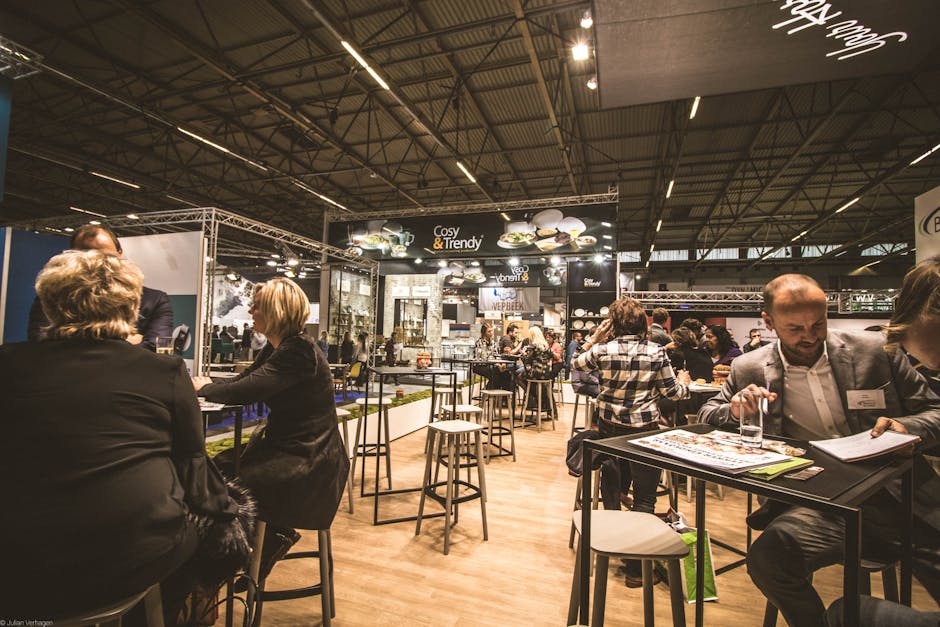
How to Choose the Right Exhibition Solution for Your Business
Assessing Your Exhibition Goals
Choosing the right exhibition solution starts with understanding your goals. What do you want to achieve at the trade show? Are you looking to generate leads, launch a new product, or simply increase brand awareness? Your objectives will guide your decision-making process. For instance, if you’re looking to make a bold statement, you might consider a more elaborate modular display that’s easily customizable.
Consider the type of products or services you’re showcasing. If you need to demonstrate complex equipment, a spacious exhibit space with ample room for interaction might be necessary. On the other hand, if you’re promoting a service, a sleek and modern display that effectively communicates your message might be more suitable.
Budget and Space Constraints
Budget is a critical factor in choosing an exhibition solution. You’ve got to balance the cost with the potential return on investment. Modular display systems, like those offered by Blockfit Expo Kit, can be more cost-effective in the long run since they’re reusable. Consider the cost per use over multiple events.
Space constraints are another crucial consideration. What size booth are you allocated? How can you maximize that space to achieve your exhibition goals? Measure your available space and think about the layout. You might want to include areas for product demonstrations, meetings, or simply showcasing your brand.
Evaluating Customization Needs
Customization is key to standing out at trade shows. Think about how you can tailor your exhibition solution to reflect your brand identity. Can you easily change graphics, lighting, or layout? A modular display system that allows for flexibility can be a significant advantage. Check out our guide on expo booth Mumbai for more insights on customization.
- Consider the ease of setup and teardown.
- Think about storage and transportation costs.
- Evaluate the durability and quality of materials.
By carefully assessing your exhibition goals, budget, space constraints, and customization needs, you can make an informed decision about whether a modular display or traditional booth is right for your business.
Features and Benefits of Blockfit Expo Kit’s Modular Displays
Key Features of Blockfit Expo Kit’s Modular Displays
Blockfit Expo Kit’s modular displays are designed to make your exhibition experience smoother and more efficient. One of the standout features is their tool-free assembly, which saves you time and labor costs. The reusable and durable blocks that make up the display system are designed to withstand multiple uses, reducing waste and the need for frequent replacements.
The modular design allows for flexibility and customization, enabling you to configure your booth according to your specific needs. Whether you’re looking to create a simple display or a complex exhibit space, Blockfit Expo Kit’s system can adapt to your requirements.
- Easy to assemble and disassemble without tools
- Reusable blocks reduce waste and save on replacement costs
- Modular design allows for flexible configuration and customization
- Durable construction withstands multiple exhibitions
Benefits for Your Business
By choosing Blockfit Expo Kit’s modular displays, you’re not just getting a booth – you’re getting a cost-effective solution that streamlines your exhibition presence. The modular display vs traditional booths comparison reveals significant advantages in terms of setup time, reusability, and customization. For instance, our modular system can be easily reconfigured for different exhibitions, saving you time and resources. Learn more about how our solutions can benefit your business in our guide on expo booth Mumbai.
| Feature | Modular Display | Traditional Booth |
|---|---|---|
| Assembly Time | Quick, tool-free | Labor-intensive, requires tools |
| Reusability | High, reusable blocks | Limited, often single-use |
| Customization | Highly customizable | Limited design flexibility |
With Blockfit Expo Kit, you’re investing in a system that can grow and adapt with your business needs, making it a smart choice for frequent exhibitors.
Common Challenges with Traditional Booths and How Modular Displays Solve Them
{
“html”: “
Traditional booths have been the norm for many years, but they’re not without their challenges. Exhibitors often face high setup costs, limited customization options, and environmental waste. Let’s dive into these common problems and explore how modular displays can provide a more efficient and cost-effective solution.
High Setup Costs and Labor Challenges
Traditional booths typically require a lot of labor to set up, which can be expensive. You’re paying for installation teams, electricians, and other professionals to get your booth ready. With modular displays, the setup process is much simpler. The tool-free assembly means you can get your display up and running quickly, reducing labor costs.
Limited Customization Options
Traditional booths can be restrictive when it comes to customization. You’re often limited by the physical structure of the booth, and making changes can be costly. Modular displays, on the other hand, offer a high degree of flexibility. You can easily reconfigure your display to suit different exhibition spaces and branding needs.
Environmental Waste
The exhibition industry is notorious for generating waste. Traditional booths are often used once and then discarded, contributing to this problem. Modular displays are designed to be reusable, reducing the need for single-use materials and minimizing waste. By choosing a modular display, you’re not only saving money but also doing your part for the environment.
Some key benefits of modular displays include:
- Easy to assemble and disassemble
- Reusable and durable
- Highly customizable
- Environmentally friendly
For more information on how to create an effective exhibition presence, check out our guides on expo booth Mumbai and exhibition booth Delhi. These resources can help you understand the benefits of modular displays and how they can enhance your exhibition strategy.
”
}
Conclusion: Making the Right Choice for Your Business
As you’ve seen throughout this guide, choosing between a modular display and a traditional booth depends on several factors, including your exhibition goals, budget, and specific needs. We’ve explored the benefits of modular displays, including their reusability, customization options, and cost-effectiveness. Now, let’s summarize the key points to help you make an informed decision.
Key Considerations for Your Exhibition Solution
- Exhibition goals: What do you want to achieve at the trade show?
- Budget constraints: What’s your budget for the exhibition?
- Space requirements: How much space do you need for your display?
- Customization needs: Do you need to customize your display for each event?
When evaluating your options, consider the long-term costs and benefits of each solution. Modular displays like those offered by Blockfit Expo Kit can provide significant savings over time, especially if you participate in multiple events throughout the year.
If you’re still unsure, consider your specific needs. For instance, if you’re looking for a cost-effective solution for frequent exhibitions, a modular display might be the way to go. On the other hand, if you have specific branding requirements or need a unique setup, a traditional booth might be more suitable.
For more information on exhibition solutions in specific cities, you can check out our guides on expo booth Mumbai or exhibition booth Delhi. These resources can provide valuable insights into the local trade show scene and help you make a more informed decision.
Ultimately, the right choice between a modular display and a traditional booth depends on your unique situation. Take the time to assess your needs, consider your options, and choose a solution that aligns with your exhibition goals and budget constraints.
Frequently Asked Questions
What is the main difference between modular displays and traditional booths?
The main difference is that modular displays are reusable and customizable, while traditional booths are often custom-built for a single event, resulting in higher costs and waste. Modular displays offer a cost-effective and efficient way to showcase products.
How do modular displays contribute to environmental sustainability?
Modular displays contribute to environmental sustainability by being reusable, which significantly reduces waste compared to traditional booths. This eco-friendly approach helps businesses minimize their environmental footprint while saving on exhibition costs.
Can modular displays be customized to fit my brand’s needs?
Yes, modular displays can be customized to fit your brand’s needs. They are designed to be versatile and adaptable, allowing you to easily modify the layout, graphics, and components to showcase your products and services effectively.
What are the cost benefits of using modular displays vs traditional booths?
Modular displays offer significant cost benefits, including reduced waste, lower logistics costs, and minimal setup and dismantling expenses. By reusing the same display system, businesses can save money on exhibition costs and allocate resources more efficiently.
When is it more beneficial to use a modular display over a traditional booth?
It’s more beneficial to use a modular display when your business frequently participates in trade shows and exhibitions. Modular displays provide a cost-effective and efficient way to showcase products, making them an ideal solution for companies with a busy event schedule.
Are modular displays suitable for large trade shows and exhibitions?
Yes, modular displays are suitable for large trade shows and exhibitions. They can be easily scaled up or down to fit your space requirements, and their modular design allows for seamless integration with other exhibition components.
How do I choose between a modular display and a traditional booth for my business?
To choose between a modular display and a traditional booth, consider your business’s exhibition frequency, budget, and environmental sustainability goals. If you participate in multiple events and prioritize cost-effectiveness and eco-friendliness, a modular display may be the better option.
What is the average lifespan of a modular display system?
The average lifespan of a modular display system can range from 5 to 10 years, depending on the quality of the materials, usage, and maintenance. With proper care, a modular display system can be reused multiple times, providing a significant return on investment.